
Introduction
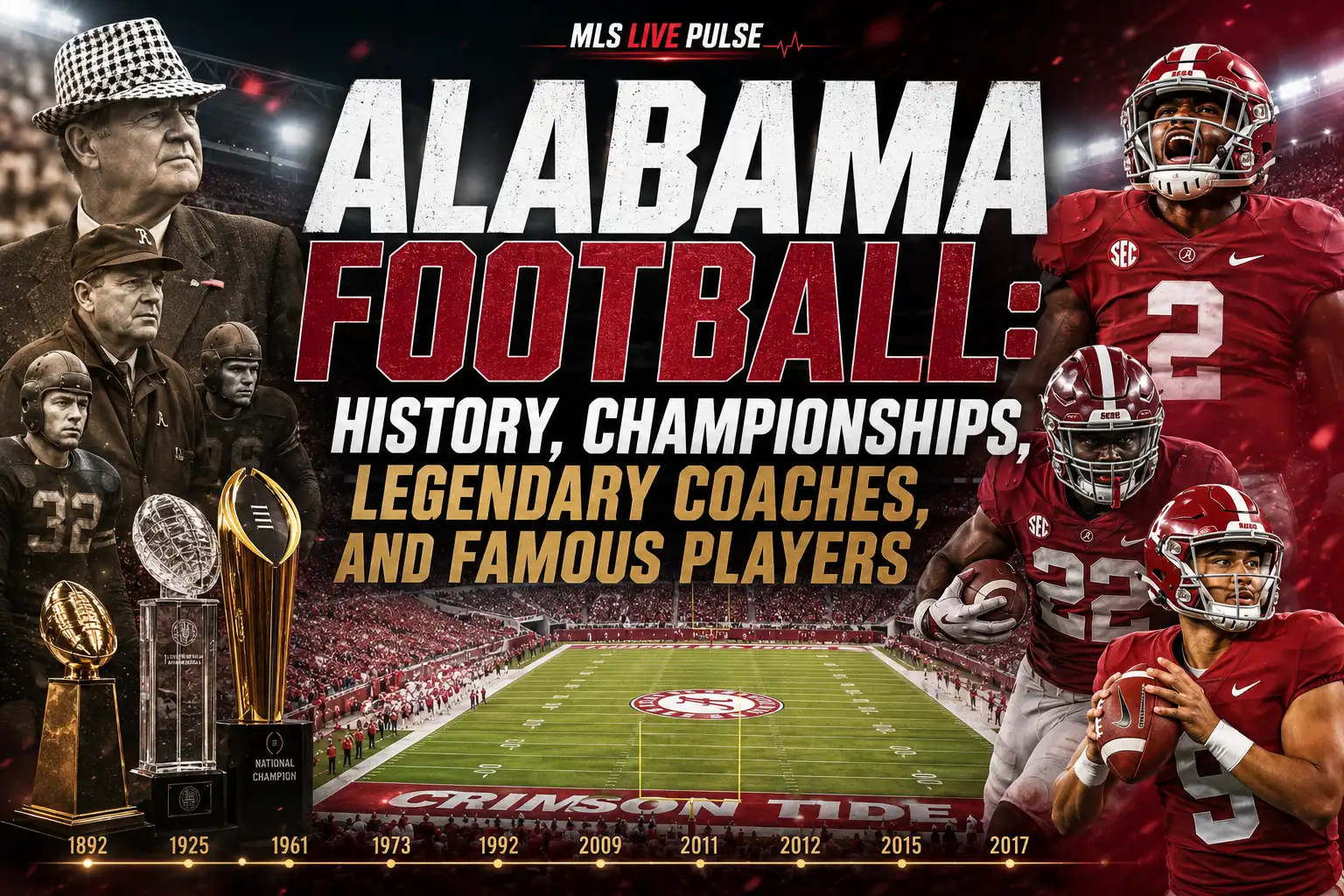
Alabama football is one of the most famous programs in American college sports. Representing the University of Alabama in Tuscaloosa, the Crimson Tide has built a remarkable reputation through championship seasons, legendary coaches, talented players, and passionate supporters.
The team’s traditional crimson and white colors are recognized by college football fans throughout the United States. Its history includes unforgettable victories, intense rivalries, outstanding individual performances, and generations of athletes who have gone on to professional football.
Alabama competes in the Southeastern Conference (SEC), one of the most competitive conferences in college football. Success requires strong recruiting, excellent coaching, teamwork, and the ability to perform under pressure.
Although the sport continues to evolve, Alabama’s traditions remain an important part of its identity. From the early teams of the 1890s to the modern playoff era, the Crimson Tide has helped shape college football’s history.
History of Alabama Football
Alabama football began in 1892 when the University of Alabama established its first team. In the early years, college football was still developing, and universities were building their sporting traditions. Alabama gradually became a competitive program and attracted growing attention.
A major milestone arrived during the 1920s. Under head coach Wallace Wade, Alabama achieved national recognition and won the 1925 Rose Bowl against Washington. The victory helped establish the program as a national football power.
During subsequent decades, the team continued to develop its reputation. Coaches such as Frank Thomas helped Alabama remain competitive, while talented players contributed to important victories.
The program experienced several successful periods, but its greatest achievements came through sustained work by players, coaches, and university staff. Training methods, recruiting, television coverage, and postseason competitions changed over time, requiring teams to adapt.
Alabama’s nickname, the Crimson Tide, became a lasting symbol of the university’s football identity. Today, the program’s history attracts fans interested in both its championship achievements and its contribution to college sports.
National Championships and Major Achievements
National championships are a major part of Alabama’s reputation. The university claims 18 national championships, spanning several different eras of college football. Historical titles can be counted differently by different organizations because no single championship system governed the sport throughout its early history. Alabama Athletics
Alabama’s championship tradition includes teams from the 1920s and 1930s, successful squads during the 1960s and 1970s, the 1992 championship team, and the modern teams led by Nick Saban.
The 1992 team, coached by Gene Stallings, completed an outstanding season and defeated Miami in the Sugar Bowl to secure the national championship. The victory was an important moment for Alabama supporters and helped restore the program’s position among college football’s leading teams.
Another major period began under Nick Saban. Alabama won national championships following the 2009, 2011, 2012, 2015, 2017, and 2020 seasons. The 2020 team completed an undefeated campaign by defeating Ohio State 52–24 in the College Football Playoff National Championship Game. Alabama Athletics
These accomplishments were built on strong recruiting, consistent preparation, talented athletes, and effective coaching. They also created high expectations for future teams. Alabama supporters look forward to every season hoping to see their team compete for conference honors and another national title.
Legendary Coaches of the Crimson Tide
Alabama’s success is closely connected to coaches who developed talented teams and established a culture of discipline. Two especially important figures are Paul “Bear” Bryant and Nick Saban.
Bear Bryant
Paul “Bear” Bryant became Alabama’s head coach in 1958. His teams were known for physical football, disciplined preparation, and determined performances. During his time in Tuscaloosa, Bryant won six national championships and helped establish Alabama as a leading program.
Bryant’s influence extended beyond the field. His distinctive houndstooth hat became one of college football’s recognizable images, while his leadership helped shape the team’s identity for decades.
Nick Saban
Nick Saban became Alabama’s head coach in 2007 and led the program through one of the most successful periods in its history. His teams combined strong defenses, productive offenses, careful preparation, and outstanding player development.
Saban won six national championships at Alabama before retiring in January 2024. His methods influenced coaching throughout college football, particularly in recruiting, practice standards, and preparing players for high-pressure situations. Alabama Athletics
Both Bryant and Saban left lasting legacies. Their accomplishments continue to influence how fans understand Alabama football and what they expect from the team.
Famous Alabama Football Players
Alabama has produced many talented players who have excelled in college football and continued their careers in the NFL. These athletes have helped the Crimson Tide win important games and attract attention from fans across the country.
Derrick Henry became one of Alabama’s most memorable running backs. During the 2015 season, he delivered outstanding performances and won the Heisman Trophy. His combination of strength and speed made him a major threat to opposing defenses.
Tua Tagovailoa became famous for his accuracy and ability to make important passes. He played a key role in Alabama’s 2017 national championship victory, helping the team defeat Georgia in an overtime thriller.
Bryce Young won the Heisman Trophy in 2021 after an impressive season as Alabama’s quarterback. His passing ability, decision-making, and composure helped the team reach the national championship game.
Other notable Alabama players include Joe Namath, Ken Stabler, Bart Starr, Julio Jones, and DeVonta Smith. Each played a different role in the sport’s history, demonstrating the range of talent associated with the university.
The development of outstanding athletes remains central to Alabama’s identity. Players benefit from competitive training, experienced coaching, and opportunities to test their skills against leading college programs.
Bryant-Denny Stadium and the Game-Day Experience
The Crimson Tide plays its home games at Saban Field at Bryant-Denny Stadium in Tuscaloosa, Alabama. The stadium opened in 1929 and has grown substantially over the years. Its official capacity is 100,077, making it one of the largest on-campus college football stadiums in the United States. Alabama Athletics
On game day, the university and surrounding community become busy with activity. Fans wear crimson and white, gather with family and friends, and prepare to support their team. Inside the stadium, the crowd’s energy creates an exciting atmosphere for players and spectators.
The venue honors two important figures in Alabama’s history: former university president George Denny and legendary coach Bear Bryant. In 2024, the field was also named in honor of Nick Saban, recognizing his achievements as Alabama’s head coach. Alabama Athletics
The stadium hosts important conference games and matchups against nationally recognized opponents. Playing at home can provide Alabama with an advantage because the team is familiar with its surroundings and receives strong support from its fans.
For many supporters, attending a game in Tuscaloosa is more than watching football. It is an opportunity to participate in a university tradition that connects generations of students, alumni, and families.
Alabama Football’s Biggest Rivalries
Rivalries are among the most exciting parts of college football. They create memorable moments, encourage passionate support, and give regular-season games additional importance.
The Iron Bowl: Alabama vs. Auburn
The annual game between Alabama and Auburn is known as the Iron Bowl. It is one of the most famous rivalries in American college football.
The matchup means a great deal to supporters throughout Alabama. Fans follow the game closely because the result brings bragging rights and can influence conference standings and postseason opportunities.
Even when one team enters the contest with a better record, rivalry games can be unpredictable. Strong performances, unexpected mistakes, and late scoring plays can decide the outcome.
Alabama vs. Tennessee
The rivalry with Tennessee is another important part of the Crimson Tide’s history. The teams have faced one another for generations, and their meetings often attract significant attention from college football fans.
Other Major Opponents
Alabama also has important matchups against programs such as Georgia and LSU. These games can affect the SEC race and national championship hopes.
Rivalries help make every season memorable. They give fans special games to anticipate and create stories that are shared long after the final whistle.
Alabama Football’s Playing Style and Strategy
Alabama has adapted its playing style as college football has changed. Traditionally, the team was known for physical offensive lines, powerful running backs, and aggressive defense. These qualities helped the Crimson Tide control games and challenge strong opponents.
Under Nick Saban, Alabama became particularly well known for defensive discipline and careful preparation. Players were expected to understand their responsibilities, tackle effectively, and limit mistakes. The offense also developed into a productive unit capable of running the ball and making explosive passes.
Modern college football places greater emphasis on speed, quarterback performance, and flexible offensive systems. Teams often use different formations to create space for receivers and running backs. Alabama has recruited talented players to compete in these changing conditions.
Success requires more than individual ability. Players must communicate, study opponents, follow the game plan, and work together. Coaches review game footage to identify weaknesses and prepare for upcoming matchups.
Alabama’s ability to combine traditional strengths with modern tactics will remain important as it competes against other leading programs.
Alabama Football in the Modern Era
Alabama entered a new chapter when Nick Saban retired in January 2024. Kalen DeBoer became the head coach and took responsibility for continuing the program’s successful tradition.
DeBoer brought experience from previous coaching positions, including his time at Washington. His challenge was to maintain Alabama’s competitive standards while introducing his own methods and adjusting to the changing college football environment.
In April 2026, the University of Alabama announced a contract extension that keeps DeBoer under contract through January 2033. The university reported that his 2025 team finished 11–4, reached the SEC Championship Game, qualified for the College Football Playoff, and won a playoff game against Oklahoma. Alabama Athletics
College football continues to change through the transfer portal, name, image, and likeness opportunities, conference realignment, and the expanded playoff format. Coaches must manage rosters carefully, develop players, and prepare for strong opponents throughout the season.
Alabama’s history provides a strong foundation, but every new team must earn its achievements. Recruiting, teamwork, player development, and consistent performances will be essential to the Crimson Tide’s future.
The Future of Alabama Football
The future of Alabama football will depend on how effectively the program adapts to changes in the sport. Recruiting talented athletes remains important, but developing those players and building a united team are equally valuable.
Alabama needs strong performances across all areas of the game, including offense, defense, and special teams. Quarterbacks must make smart decisions, offensive linemen must protect their teammates, and defenders must limit opponents’ opportunities.
The coaching staff also has to help players prepare for challenging schedules and high-pressure games. Video analysis, conditioning, tactical planning, and communication can all contribute to better performances.
The Crimson Tide’s history, stadium, supporters, and national reputation continue to make the program a major part of college football. However, other universities are also investing in talented players and experienced coaching staffs.
For fans, each season brings new opportunities to watch emerging stars, enjoy major rivalries, and follow the team’s progress. Whether Alabama is pursuing an SEC title or competing in the College Football Playoff, its performances will remain an important topic for college football supporters.
Conclusion
Alabama football has developed into one of the most recognized programs in American college sports. Since beginning in 1892, the Crimson Tide has built a legacy through championship seasons, legendary coaches, talented players, and passionate fans.
Bear Bryant and Nick Saban helped establish high standards, while athletes such as Derrick Henry, Tua Tagovailoa, and Bryce Young contributed memorable performances. Saban Field at Bryant-Denny Stadium and rivalries such as the Iron Bowl add to the team’s identity.
As college football continues to evolve, Alabama must keep recruiting effectively, developing players, and adapting its strategies. Its history creates high expectations, but future success will depend on what each new team accomplishes on the field.
For supporters around the country, the Crimson Tide remains a symbol of tradition, competition, and the excitement of college football.
Frequently Asked Questions (FAQs)
1. How many national championships has Alabama football won?
Alabama claims 18 national championships, including titles from the early years of college football and championships won during the modern era. Historical championship totals can vary depending on which selectors and recognition systems are counted. Alabama Athletics
2. Who is the most famous Alabama football coach?
Paul “Bear” Bryant and Nick Saban are two of Alabama’s most famous coaches. Both won six national championships with the Crimson Tide and helped establish the program’s reputation for success.
3. What stadium does Alabama football play in?
Alabama plays its home games at Saban Field at Bryant-Denny Stadium in Tuscaloosa, Alabama. The stadium opened in 1929 and has an official capacity of 100,077 spectators. Alabama Athletics
4. What is Alabama football’s biggest rivalry?
The Iron Bowl, played between Alabama and Auburn, is one of the program’s most important rivalries. The game attracts considerable attention because of its history, statewide significance, and potential impact on the teams’ seasons.
5. Who is Alabama football’s head coach in 2026?
Kalen DeBoer is Alabama’s head coach in 2026. His contract was extended through January 2033, and he is responsible for leading the Crimson Tide into its next chapter. Alabama Athletics